Georgian designers are known worldwide for their bold experiments, while many still reference traditional motifs even in their new collections. What did the ancient Georgian national costume look like? What is fashionable to wear in Tbilisi right now? And which fashion house is led by a refugee from Abkhazia? Find out in this Paper Kartuli feature, created in collaboration with fashion historian Mariam Okreshidze.
National Costume: Key Elements and Motifs
Georgian style is a kind of ethno-mix – Tbilisi, a historically multicultural city, has long been a crossroads of Eastern and Western traditions, inevitably influencing the clothing of the locals. Georgian clothing was traditionally more complex and expensive than European attire. It was only in the 19th century that tailors began using European fabrics, which were noticeably lighter and more comfortable than Georgian textiles.
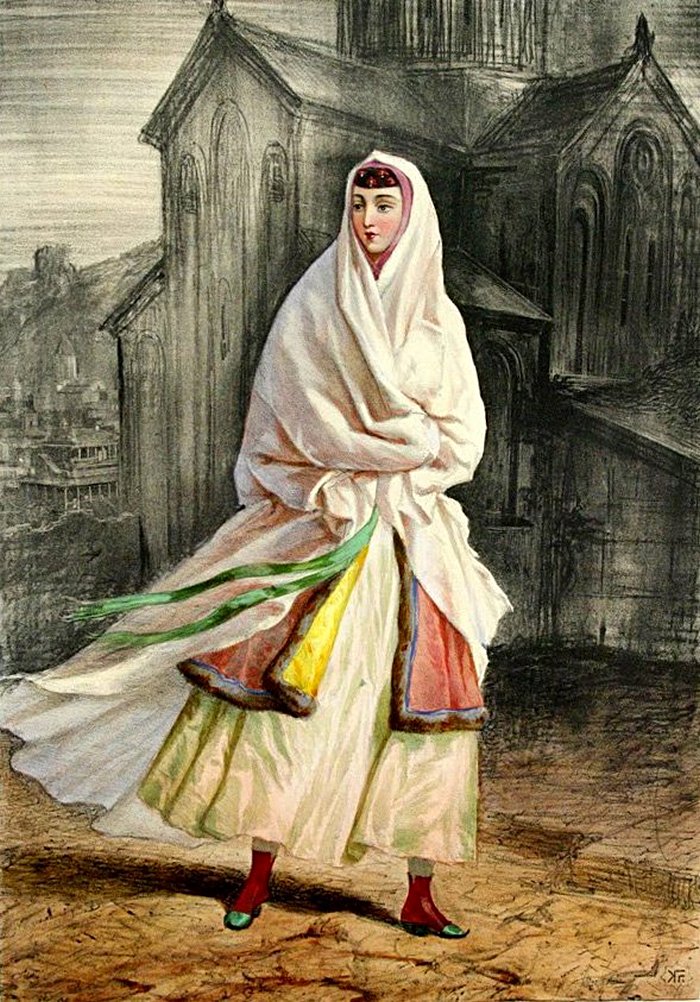
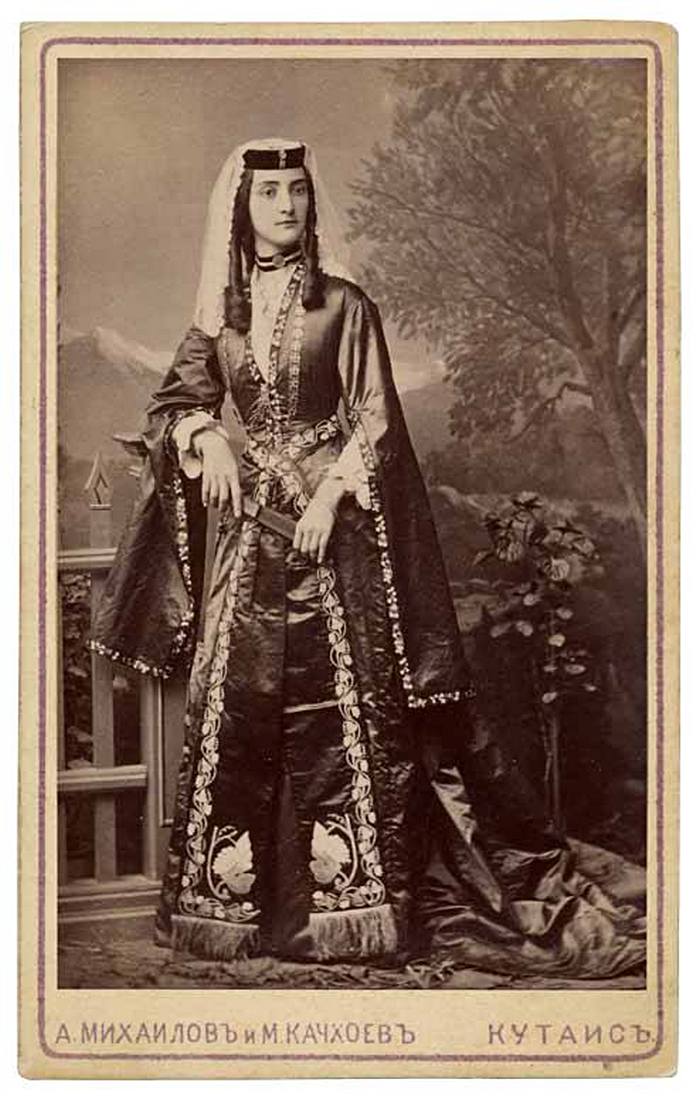
“Georgian embroidery and details contain many Asian motifs,” says fashion historian Mariam Okreshidze. “Most words denoting clothing are actually Persian, not Georgian. The famous chokha [a traditional cloak with pockets for bullet cartridges on the chest – Paper Kartuli], for example, translates from Turkish as ‘woolen fabric.’ It was difficult for Georgians to abandon national attributes in clothing, and the hardest to part with was the chokha – stopping wearing it was equivalent to losing one’s honor. Traditional headwear also remained in urban wardrobes for a long time.”
Chikhti-Kopi and Sheidishi: Unique Elements of Georgian Attire
Chikhti-kopi is a headpiece consisting of two parts. Chikhti is a forehead band, and kopi is a cotton-filled semicircle made of fur or silk. The kopi was placed into the chikhti, secured with pins, and covered with a mandili – a white scarf. Only in the 19th century did the chikhti-kopi begin to give way to French and German hats.
Another interesting element of the national costume is sheidishi – women’s silk trousers in bright colors, embroidered with gold or silver thread, traditionally worn under dresses for added comfort over underwear. The famous Georgian model Tako Natsvlishvili – a regular at Versace, Christian Dior, Giorgio Armani, and Dolce & Gabbana fashion shows – founded her own lingerie brand, which she named Sheidish.
Georgian Dresses: Styles and Structure
“The traditional Georgian dress had a fitted silhouette,” notes Mariam. “Urban dresses were always tailored at the waist, with the upper part made from five to six fabrics, each seam reinforced with iron plates. There were different dress styles: Sarkhtavini, featuring front lacing; Gudjastiani, where the dress was tied with a gold-threaded breastplate. The lower, long part of the dress had a narrow strip of fabric sewn in and was decorated with a sacele belt. Over the dress, women wore a fur or velvet katib – this cloak was affordable only to the upper class. Such clothing was worn only by urban women, while girls living in mountainous areas preferred a looser fit.”
«Сейчас в Грузии национальные костюмы редко носят на улицах: встретить человека в чохе можно на каком-то аутентичном мероприятии или свадьбе, — рассказывает Мариам. — В основном в повседневной одежде тбилисцев доминирует черный цвет, даже летом. Черный — классика, с которой сочетается практически всё и которая делает образ смелее и сильнее. Изначально чоха была только черного цвета».
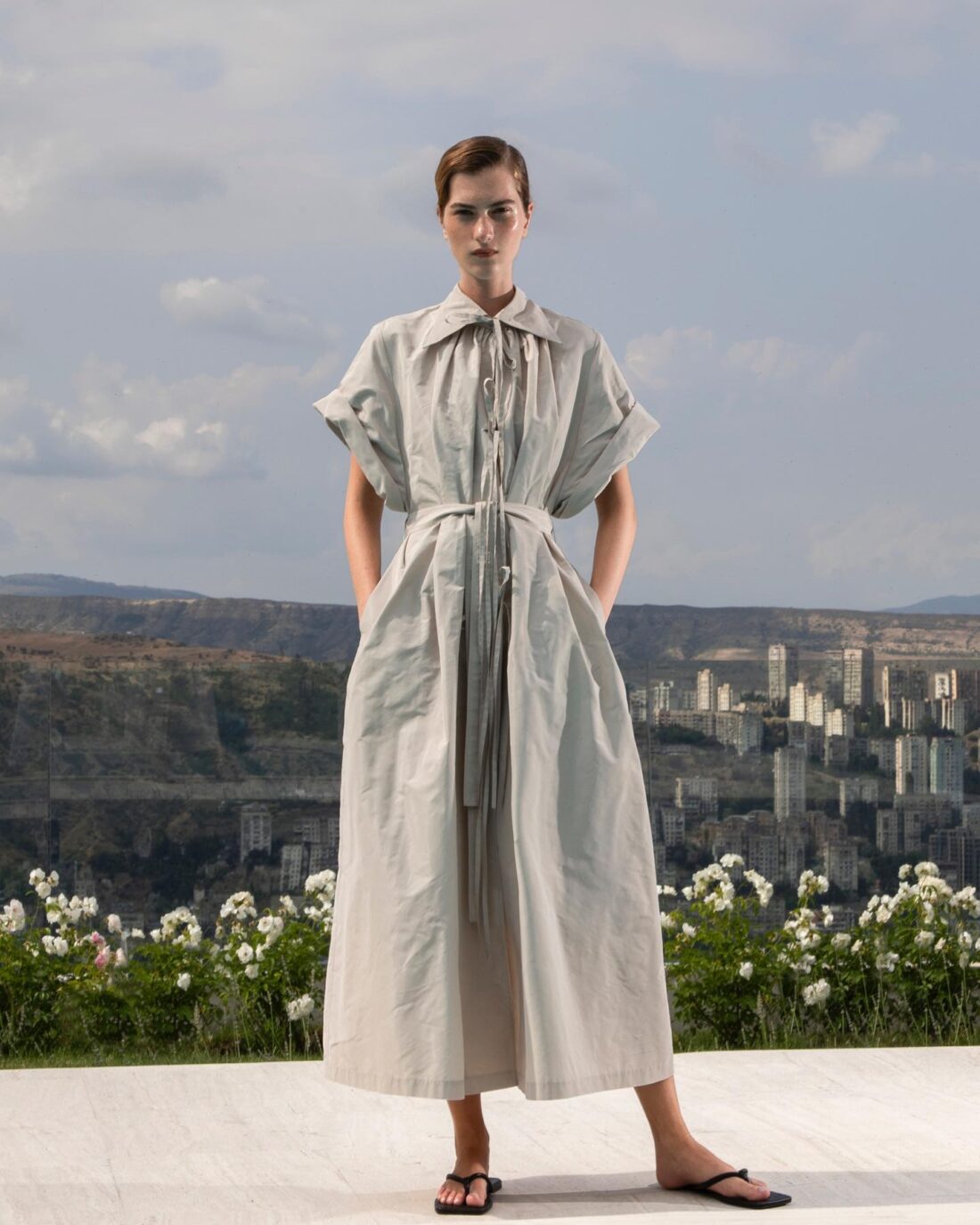
Грузинки любят надевать грубые ботинки с легкими юбками, совмещая таким образом женственность с волей и независимостью. Яркие цвета редко встречаются в гардеробе местных модниц, но при этом девушки обожают экспериментировать с деталями и украшениями. Грузинские люксовые бренды женской одежды отличает любовь к строгому, сдержанному гардеробу и плотному крою, который не скрывает, а наоборот подчеркивает женственность своих покупательниц. Ingorokva, Materiel — главные люксовые марки, которые специализируются на жакетах, брюках и тренчах.
To showcase their high status, wealthy Georgians replaced the chokha with a silk kaba. The festive attire of the wealthy class – kulanja – was made of velvet and fur. The headpiece, however, remained the same for everyone – the papakha. And, of course, an essential attribute of the traditional outfit was a dagger fastened to the belt.
Modernity: Warrior-like Femininity and Dance Core
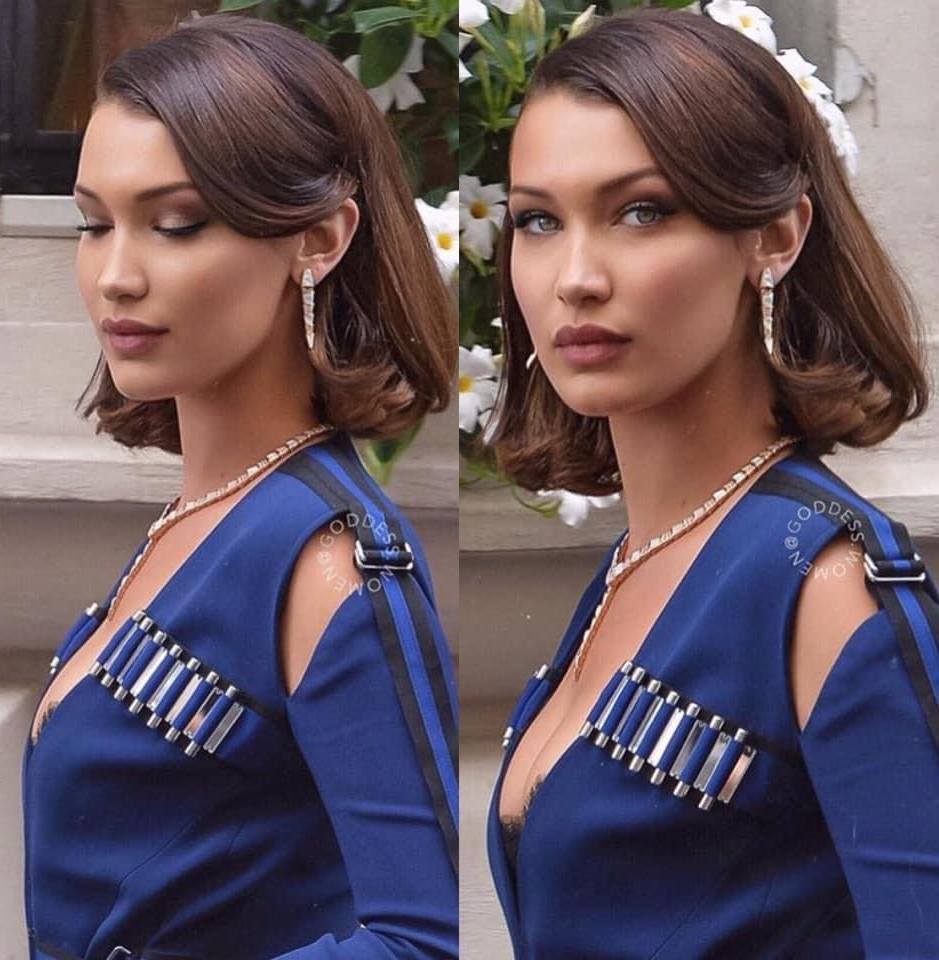
In 2017, young Georgian designer David Koma presented his Fall-Winter collection at London Fashion Week, incorporating elements of the chokha. Koma’s work impressed American supermodel Bella Hadid so much that she chose his outfit – a blue suit with recognizable bullet cartridge patches – for the Bulgari fragrance launch in Rome.
“Nowadays, national costumes are rarely worn on the streets in Georgia – you might see someone in a chokha at an authentic event or a wedding,” says Mariam. “In everyday clothing, black dominates among Tbilisi residents, even in summer. Black is a classic that pairs with almost everything and makes an outfit bolder and stronger. Originally, the chokha was only black.”
Georgian women love pairing rugged boots with light skirts, combining femininity with willpower and independence. Bright colors are rarely seen in the wardrobes of local fashionistas, but they love experimenting with details and accessories. Georgian luxury brands for women’s clothing are known for their love of strict, restrained wardrobes and structured tailoring, which does not hide but rather emphasizes femininity. Ingorokva and Materiel are the leading luxury labels specializing in jackets, trousers, and trench coats.
Samoseli Pirveli: Modernizing Traditional Clothing
Samoseli Pirveli is a contemporary brand adapting traditional Georgian costumes for modern fashion. The brand offers women’s chokhas (a bold statement on female emancipation), autumn kabalaki coats, Khevsur-style jackets, bags with ethnic embellishments, and even children’s papanaki hats. Originally, the papanaki was a men’s headpiece for sun protection, but today, both men and women wear it as an accessory. All items blend well with everyday mass-market clothing, and the showroom even offers complete outfits for traditional family celebrations.
Accessories: 210–380 GEL
Shoes: around 380 GEL
Hand-embroidered clothing, such as a Khevsur jacket: 3,500 GEL
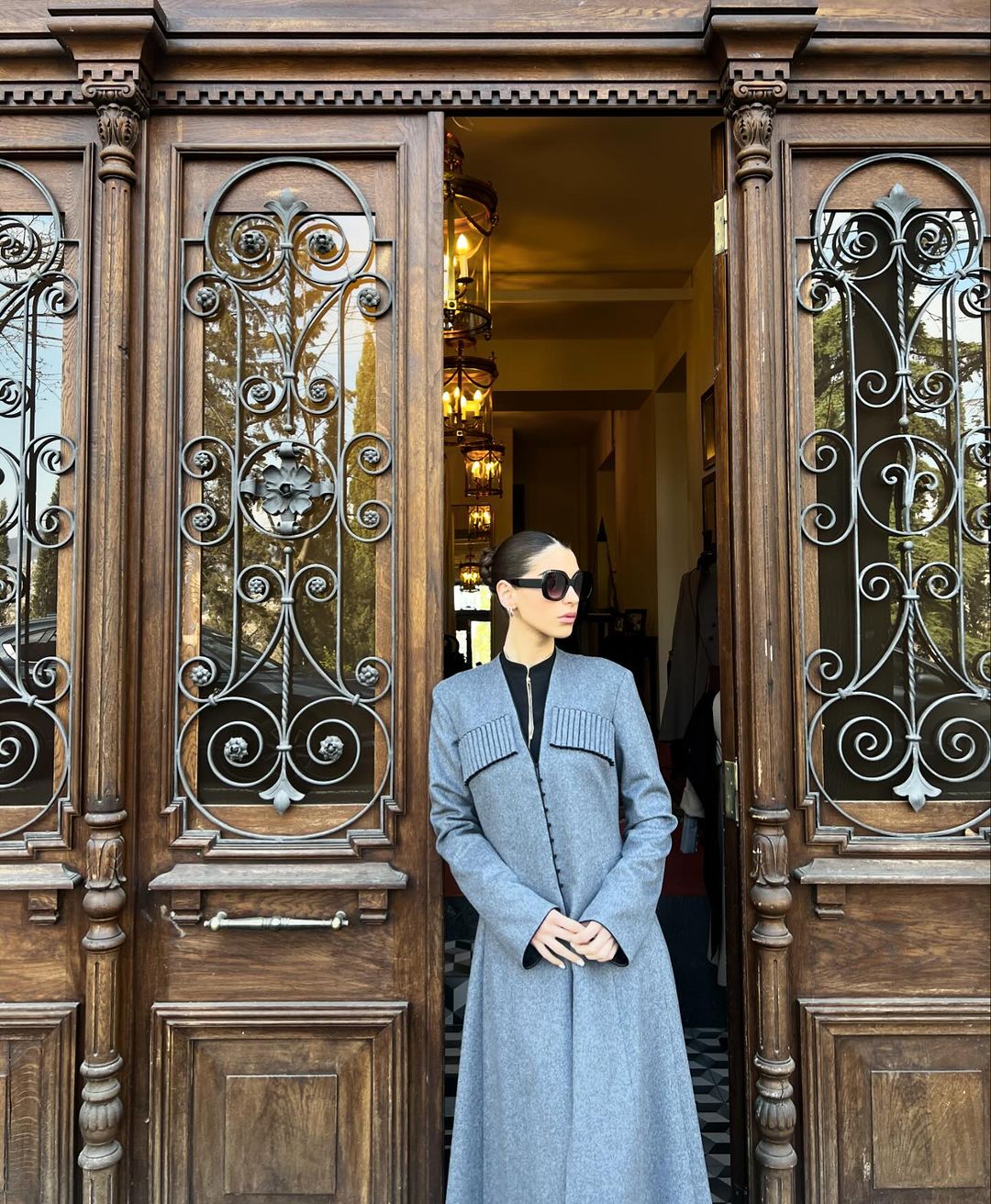
Lasha Devdariani and Georgian Embroidery in Fashion
Designer Lasha Devdariani frequently incorporates traditional handmade embroidery into his collections. However, he does not limit himself to Georgian motifs – his fabrics feature Indian kantha embroidery as well.
Saukune: Dancewear as Everyday Fashion
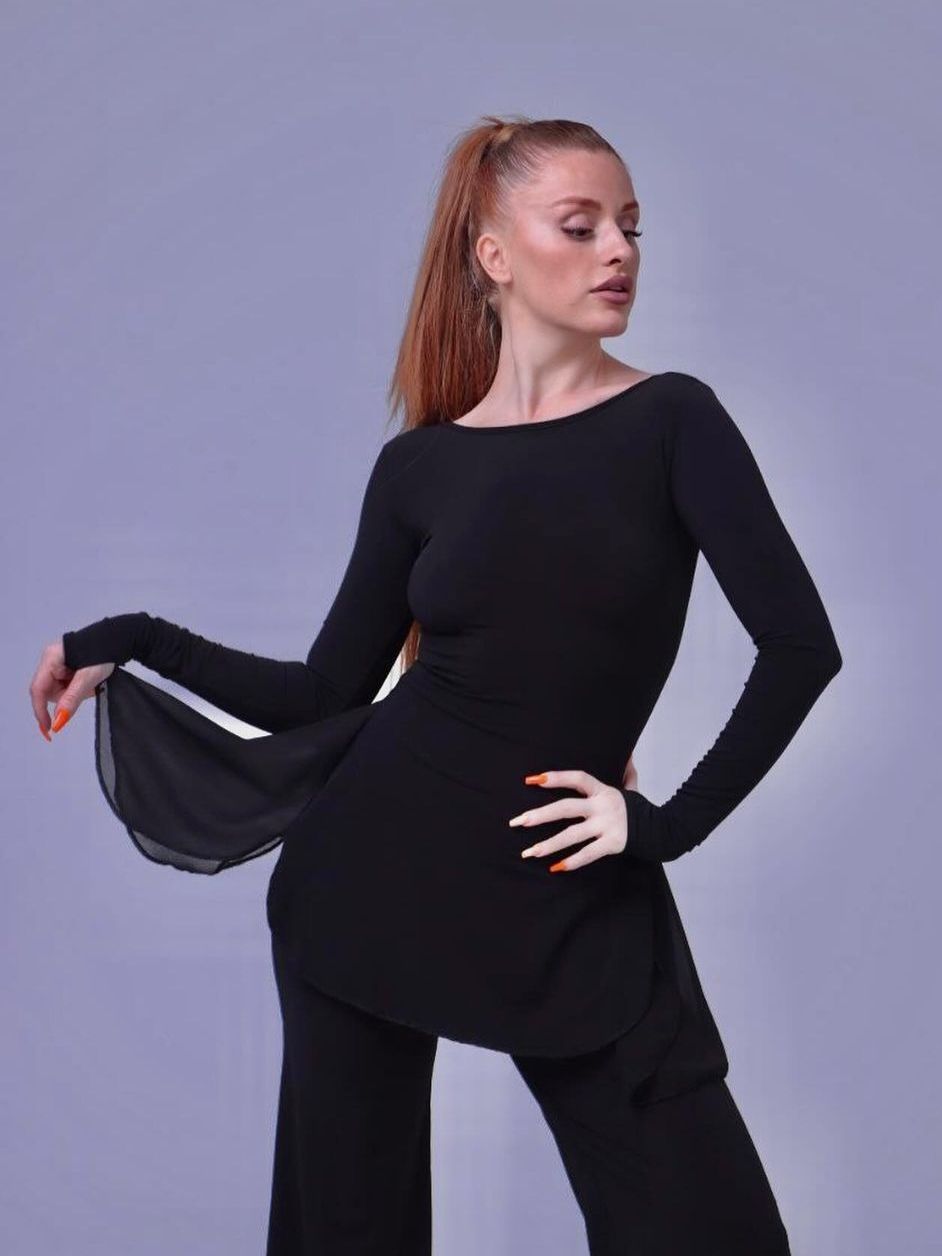
Saukune is a mass-market example of functional fashion. The brand specializes in Georgian dance training wear, but their tight black bodysuits, chiffon skirts, and flared trousers are also suitable for everyday wear.
Swimsuits: up to 50 GEL
Tunics: up to 60 GEL
Skirts: around 40 GEL
In Tbilisi, it is completely normal for women to wear dancewear-inspired outfits – tight-fitting pants paired with a short skirt – not for training, but, for example, for a casual outing with friends. Dance core is extremely popular on the city’s streets.
Anouki: A Blend of Masculinity and Elegance
The Anouki brand is owned by Anouki Areshidze, the wife of Tbilisi’s mayor, Kakha Kaladze. The brand is famous for its masculine trouser suits and gained international recognition when a dress from its Love is Love collection was featured in the wardrobe of the main character in the series Emily in Paris.
Demna Gvasalia: The Most Famous Georgian Designer
The most well-known Georgian fashion designer is undoubtedly Demna Gvasalia – founder of Vetements and creative director of Balenciaga. He has wrapped Kim Kardashian in packing tape, covered top models in mud on his runways, staged shows in McDonald’s, and even sent out invitations in the form of condoms.

In 2022, however, Gvasalia and Balenciaga faced backlash over a children’s clothing campaign, with accusations of promoting pedophilia. To avoid “cancellation,” Gvasalia publicly condemned child exploitation, initiated an internal investigation, and sued the company responsible for the shoot. Though this helped restore his reputation, the scandal still led to him being stripped of the prestigious Global Voices Award.
At the start of his career – long before his avant-garde experiments – Demna, a refugee from Abkhazia, dedicated the Vetements Fall-Winter 2019 collection to the 1992 war and life in 1990s Georgia. The collection featured sweatshirts and hoodies with provocative slogans, trench coats resembling bathrobes, ‘gangster’ leather jackets, turtlenecks with criminal tattoos, and a T-shirt with an image of Viktor Tsoi.
The Georgian Alphabet as a Fashion Statement
“The Georgian alphabet is an important symbol for designers,” says Mariam. “The Crosty brand, for example, gained fame for sneakers featuring the inscription თავისუფლება (tavisupleba – ‘freedom’ in Georgian).
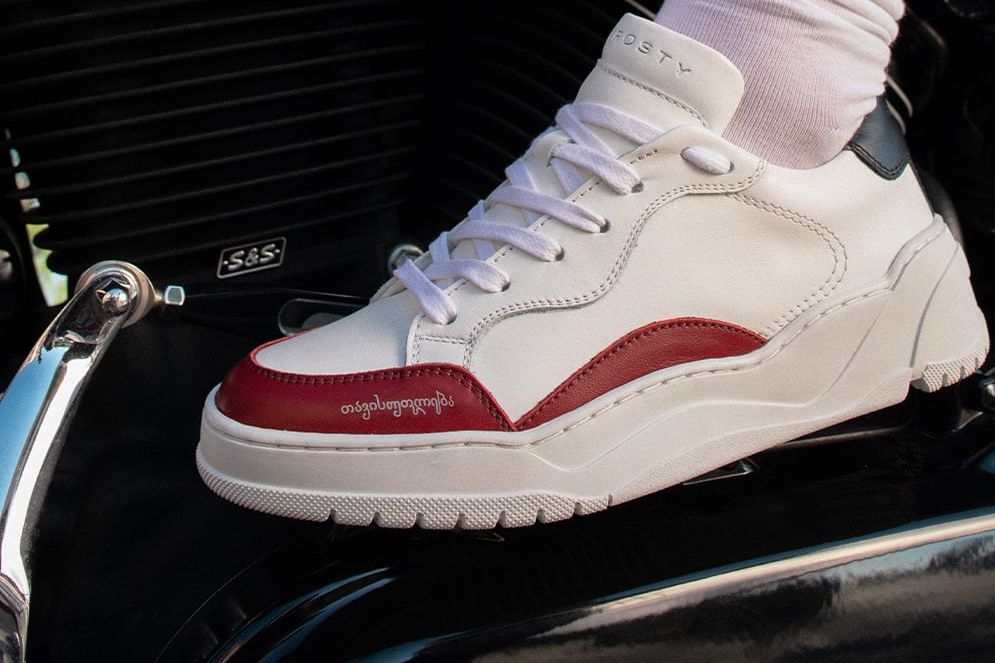
Georgian script is also popular in jewelry, attracting both foreigners, who admire its unique lettering, and Georgians, who take pride in their alphabet. Our alphabet is a special source of pride.”

